
Nobel Prize 2020
The Royal Swedish Academy of Sciences awards every year in Stockholm on 10 December the Nobel Prize according to the last will and testament of Alfred Nobel.
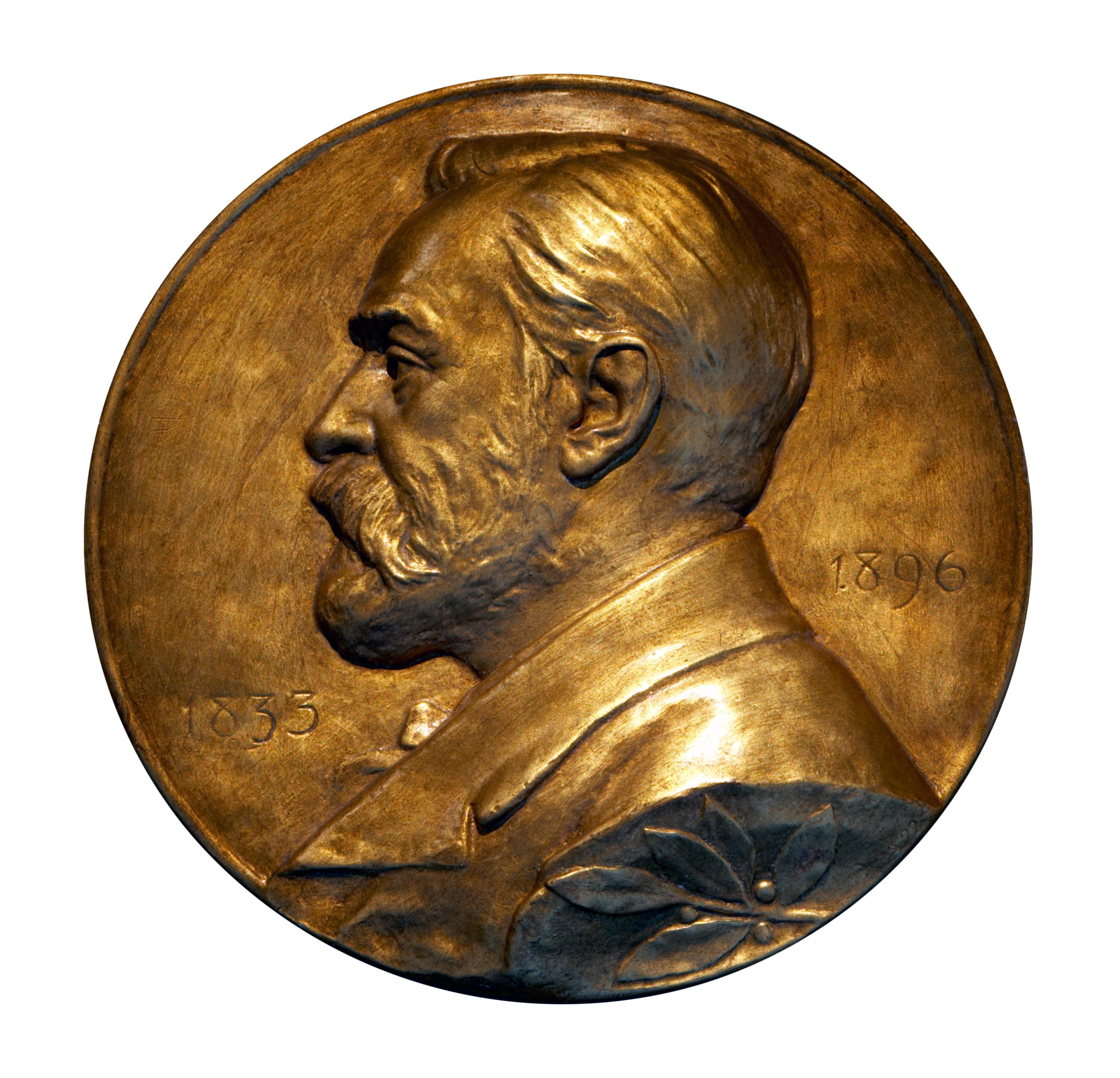
The Nobel Prize is an international award given yearly since 1901 for achievements in physics, chemistry, medicine, literature and for peace. In 1968, the Bank of Sweden instituted the Prize in Economic Sciences in Memory of Alfred Nobel, founder of the Nobel Prize.
The Prize Winners are announced in October every year. They receive their awards (a prize amount, a gold medal and a diploma) on December 10, the anniversary of Nobel's death.
Due to the ongoing pandemic this is a unique year in the history of the Nobel Prize and the medals and diplomas will be handed over to the laureates safely in their home countries. The traditional ceremony in Konserthuset Stockholm will be a digital Nobel Prize award ceremony that will be held from the City Hall in Stockholm.

Louise Glück was born 1943 in New York and lives in Cambridge, Massachusetts. Apart from her writing she is a professor of English at Yale University, New Haven, Connecticut. She made her debut in 1968 with ‘Firstborn’, and was soon acclaimed as one of the most prominent poets in American contemporary literature. She has received several prestigious awards, among them the Pulitzer Prize (1993) and the National Book Award (2014).

The Nobel Prize in Physiology or Medicine was awarded jointly to Harvey J. Alter, Michael Houghton and Charles M. Rice "for the discovery of Hepatitis C virus".Harvey J. Alter, Michael Houghton and Charles M. Rice made seminal discoveries that led to the identification of a novel virus, Hepatitis C virus. Prior to their work, the discovery of the Hepatitis A and B viruses had been critical steps forward, but the majority of blood-borne hepatitis cases remained unexplained. The discovery of Hepatitis C virus revealed the cause of the remaining cases of chronic hepatitis and made possible blood tests and new medicines that have saved millions of lives.

Emmanuelle Charpentier and Jennifer A. Doudna have discovered one of gene technology’s sharpest tools: the CRISPR/Cas9 genetic scissors. Using these, researchers can change the DNA of animals, plants and microorganisms with extremely high precision. This technology has had a revolutionary impact on the life sciences, is contributing to new cancer therapies and may make the dream of curing inherited diseases come true.
Emmanuelle Charpentier, born 1968 in Juvisy-sur-Orge, France. Ph.D. 1995 from Institut Pasteur, Paris, France. Director of the Max Planck Unit for the Science of Pathogens, Berlin, Germany.
Jennifer A. Doudna, born 1964 in Washington, D.C, USA. Ph.D. 1989 from Harvard Medical School, Boston, USA. Professor at the University of California, Berkeley, USA and Investigator, Howard Hughes Medical Institute.

Black holes and the Milky Way’s darkest secret
Three Laureates share this year’s Nobel Prize in Physics for their discoveries about one of the most exotic phenomena in the universe, the black hole. Roger Penrose showed that the general theory of relativity leads to the formation of black holes. Reinhard Genzel and Andrea Ghez discovered that an invisible and extremely heavy object governs the orbits of stars at the centre of our galaxy. A supermassive black hole is the only currently known explanation.
Roger Penrose used ingenious mathematical methods in his proof that black holes are a direct consequence of Albert Einstein's general theory of relativity. Einstein did not himself believe that black holes really exist, these super-heavyweight monsters that capture everything that enters them. Nothing can escape, not even light.
In January 1965, ten years after Einstein’s death, Roger Penrose proved that black holes really can form and described them in detail; at their heart, black holes hide a singularity in which all the known laws of nature cease. His groundbreaking article is still regarded as the most important contribution to the general theory of relativity since Einstein.
Reinhard Genzel and Andrea Ghez each lead a group of astronomers that, since the early 1990s, has focused on a region called Sagittarius A* at the centre of our galaxy. The orbits of the brightest stars closest to the middle of the Milky Way have been mapped with increasing precision. The measurements of these two groups agree, with both finding an extremely heavy, invisible object that pulls on the jumble of stars, causing them to rush around at dizzying speeds. Around four million solar masses are packed together in a region no larger than our solar system.
Using the world’s largest telescopes, Genzel and Ghez developed methods to see through the huge clouds of interstellar gas and dust to the centre of the Milky Way. Stretching the limits of technology, they refined new techniques to compensate for distortions caused by the Earth’s atmosphere, building unique instruments and committing themselves to long-term research. Their pioneering work has given us the most convincing evidence yet of a supermassive black hole at the centre of the Milky Way.
“The discoveries of this year’s Laureates have broken new ground in the study of compact and supermassive objects. But these exotic objects still pose many questions that beg for answers and motivate future research. Not only questions about their inner structure, but also questions about how to test our theory of gravity under the extreme conditions in the immediate vicinity of a black hole”, says David Haviland, chair of the Nobel Committee for Physics.

This year’s Laureates, Paul Milgrom and Robert Wilson have studied how auctions work. They have also used their insights to design new auction formats for goods and services that are difficult to sell in a traditional way, such as radio frequencies. Their discoveries have benefitted sellers, buyers and taxpayers around the world.
Paul R. Milgrom, born 1948 in Detroit, USA. Ph.D. 1979 from Stanford University, Stanford, USA. Shirley and Leonard Ely Jr. Professor of Humanities and Sciences, Stanford University, USA.
Robert B. Wilson, born 1937 in Geneva, USA. D.B.A. 1963 from Harvard University, Cambridge, USA. Adams Distinguished Professor of Management, Emeritus, Stanford University, USA.
Source: https://www.swedenabroad.se/en/embassies/croatia-zagreb/current/news/nobel-prize-2020/


No comments:
Post a Comment